
Compare / PFAS treatment
PFAS destruction vs. carbon and ion exchange
Capture moves PFAS to a new waste stream. Destruction ends it.
Short answer
Granular activated carbon (GAC) and ion exchange (IX) resin capture PFAS from water onto media. The PFAS is not destroyed. It stays on the spent media, which then has to be handled and disposed of. Olift® foam fractionation concentrates PFAS into a small volume, and Obreak® electro-oxidation destroys it onsite, breaking it down to carbon dioxide and fluoride ions.
The difference
Capture is not destruction
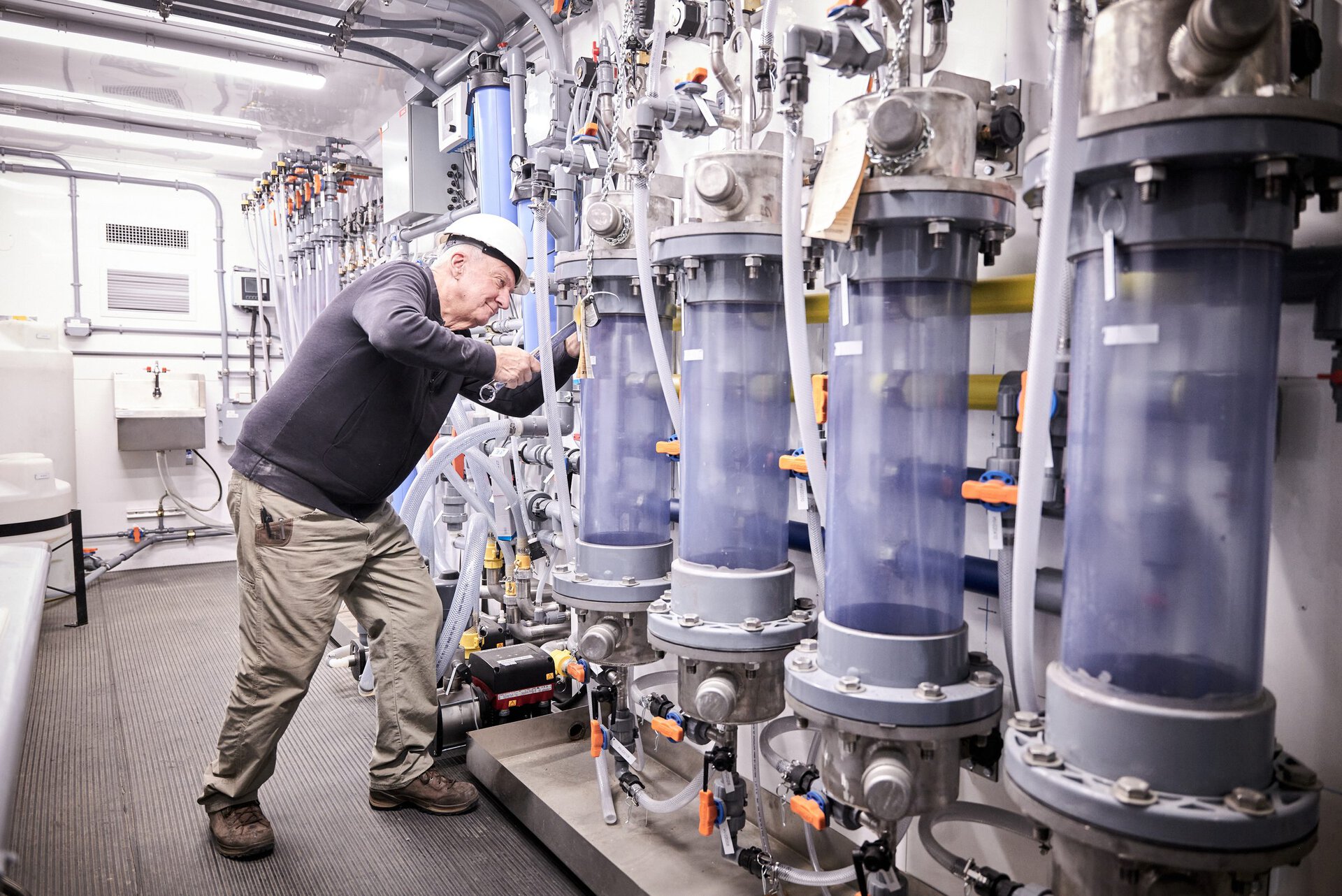
Common treatments for removing PFAS from water include separation (reverse osmosis) and adsorption (granular activated carbon or ion exchange resin). These approaches capture PFAS from water into a reverse osmosis concentrate or into PFAS-contaminated media.
The result is a PFAS waste stream that has to be dealt with separately. That adds cost and risk, and the PFAS is still there at the end.
Side by side
How the two approaches compare
| GAC and ion exchange | Olift® foam fractionation and Obreak® electro-oxidation | |
|---|---|---|
| What it does with PFAS | Captures PFAS onto carbon or resin | Concentrates PFAS with foam, then destroys it by electro-oxidation |
| End state of the PFAS | Remains on the spent media | Carbon dioxide and fluoride ions |
| Waste left to manage | Spent media for disposal or regeneration | A small foamate volume, generally 1% to 10% of the influent, treated onsite |
| Where the PFAS ends up | Offsite, after the media leaves the plant | Destroyed at the site |
| Strong fit | Lower-strength water that is otherwise clean | High-strength and difficult streams such as RO concentrate, landfill leachate and AFFF-impacted water |
| Delivery | Vessels and media changeouts | Container, trailer or fixed installation, continuous and remotely monitored |
Performance of any adsorption media depends on the PFAS present, competing compounds and water chemistry. A pilot on your own water is the reliable way to compare.
>99.5%
of regulated PFAS removed from 106,000 gallons of fire training water at Hobart International Airport with Olift® foam fractionation
93%
of total PFAS removed from landfill leachate at the Passaic Valley Sewerage Commission pilot
94 to 96%
of the concentrated PFAS destroyed by Obreak® electro-oxidation in that same pilot
In practice
Better together, not either-or
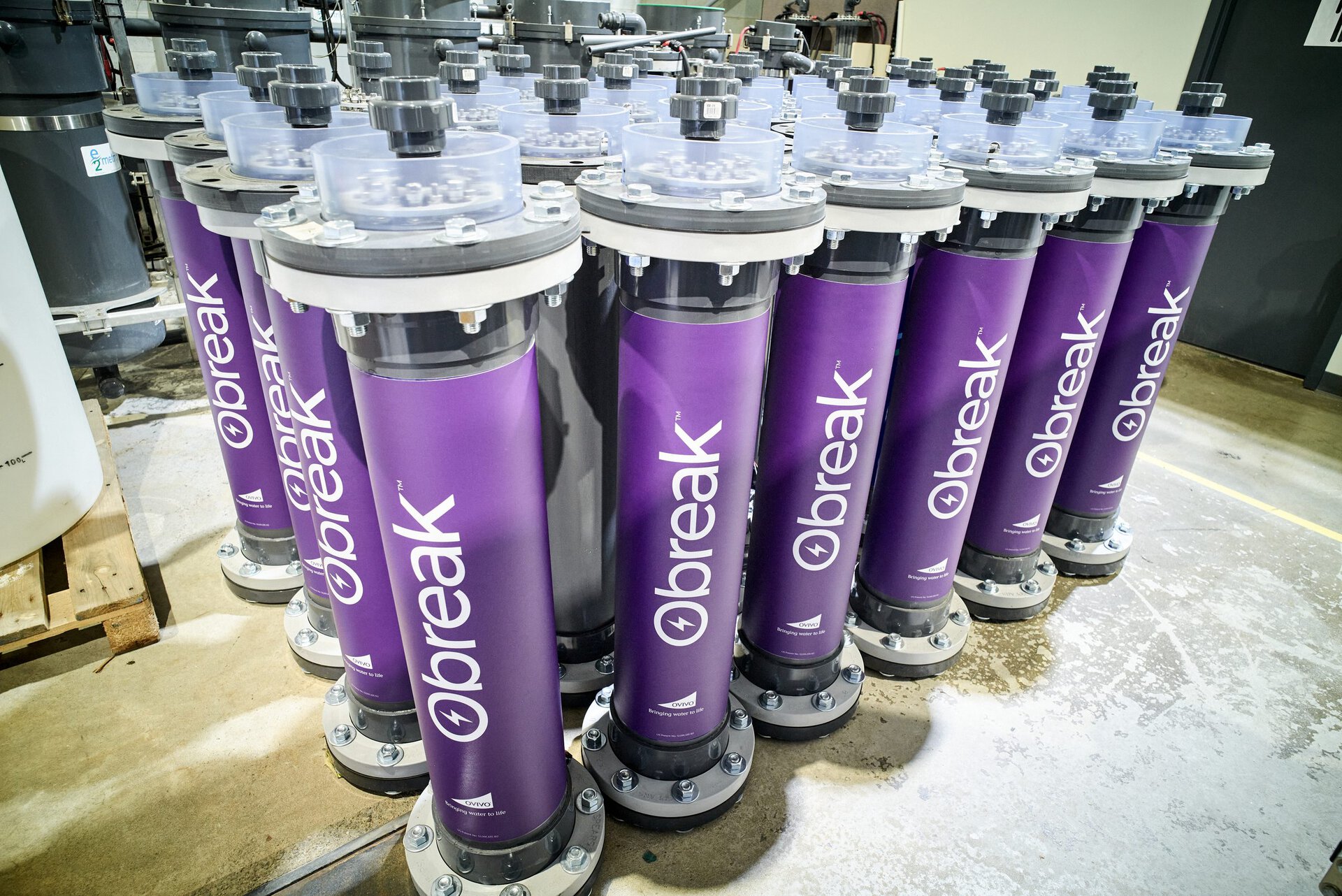
Destruction does not have to replace every other step. The E2METRIX® approach is a toolbox: concentrate upstream with Olift® foam fractionation, destroy with Obreak® electro-oxidation, then finish with a media polishing step downstream.
Concentrating first matters. Olift® foam fractionation raises PFAS concentration in the feed by 100x to 10,000x, so the destruction step sees a small, strong stream and needs far less capital and energy.
FAQ
Carbon and ion exchange questions
What is the difference between PFAS capture and PFAS destruction?
Capture moves PFAS from the water onto a solid or into a concentrate. Destruction breaks the PFAS apart. Obreak® electro-oxidation breaks it down to carbon dioxide and fluoride ions.
What happens to PFAS captured by carbon or resin?
It stays on the media. The spent media has to be disposed of or regenerated, which creates a PFAS waste stream that must be dealt with separately.
Can Olift® foam fractionation and Obreak® electro-oxidation replace carbon or ion exchange?
For concentrated and difficult streams such as RO concentrate, landfill leachate and AFFF-impacted water, yes, and the PFAS is destroyed onsite. Many treatment trains still use a media polishing step at the end. An E2METRIX engineer can review your water and recommend the right mix.
Does destruction leave anything behind?
The end products of electro-oxidation are carbon dioxide and fluoride ions, both harmless at low concentrations. Olift® foam fractionation leaves a small concentrate volume that goes straight to Obreak® electro-oxidation.
How do I compare the options for my site?
Run a pilot on your water. Contact E2METRIX to talk with an engineer about your water, your limits and a pilot plan. See pilots and the case studies.
Keep reading
Related pages
Tell us about your site
Send us your flow and PFAS concentrations. An E2METRIX engineer will reply within 24 hours.