

Industries / Municipal
Municipal drinking water and wastewater
Municipal drinking water and wastewater utilities are facing an enforceable federal PFAS limit — with the compliance timeline still being decided.
4 ppt
EPA MCL FOR PFOA/PFOS IN DRINKING WATER
2029–31
EPA COMPLIANCE WINDOW (EXTENSION PROPOSED)
>90%
OF EACH REGULATED PFAS REMOVED FROM RO CONCENTRATE AT A DRINKING WATER PLANT
THE CHALLENGE
The challenge for municipal utilities
01
A federal MCL is now enforceable
EPA’s 2024 rule set a 4 ppt Maximum Contaminant Level for PFOA and PFOS in drinking water — the first legally enforceable federal PFAS limit.
02
The compliance timeline is still moving
EPA has proposed extending the PFOA/PFOS compliance deadline from 2029 to 2031, and separately proposed rescinding limits on four other PFAS. Utilities are planning under real uncertainty.
03
Legacy infrastructure wasn’t built for this
Most treatment plants were never designed to remove PFAS, and ratepayers are the ones who ultimately absorb the capital cost of retrofitting.
04
Displacement isn’t a long-term answer
GAC and ion exchange media capture PFAS but don’t destroy it — someone still has to dispose of the spent, PFAS-laden media.
THE RECOMMENDED SOLUTION
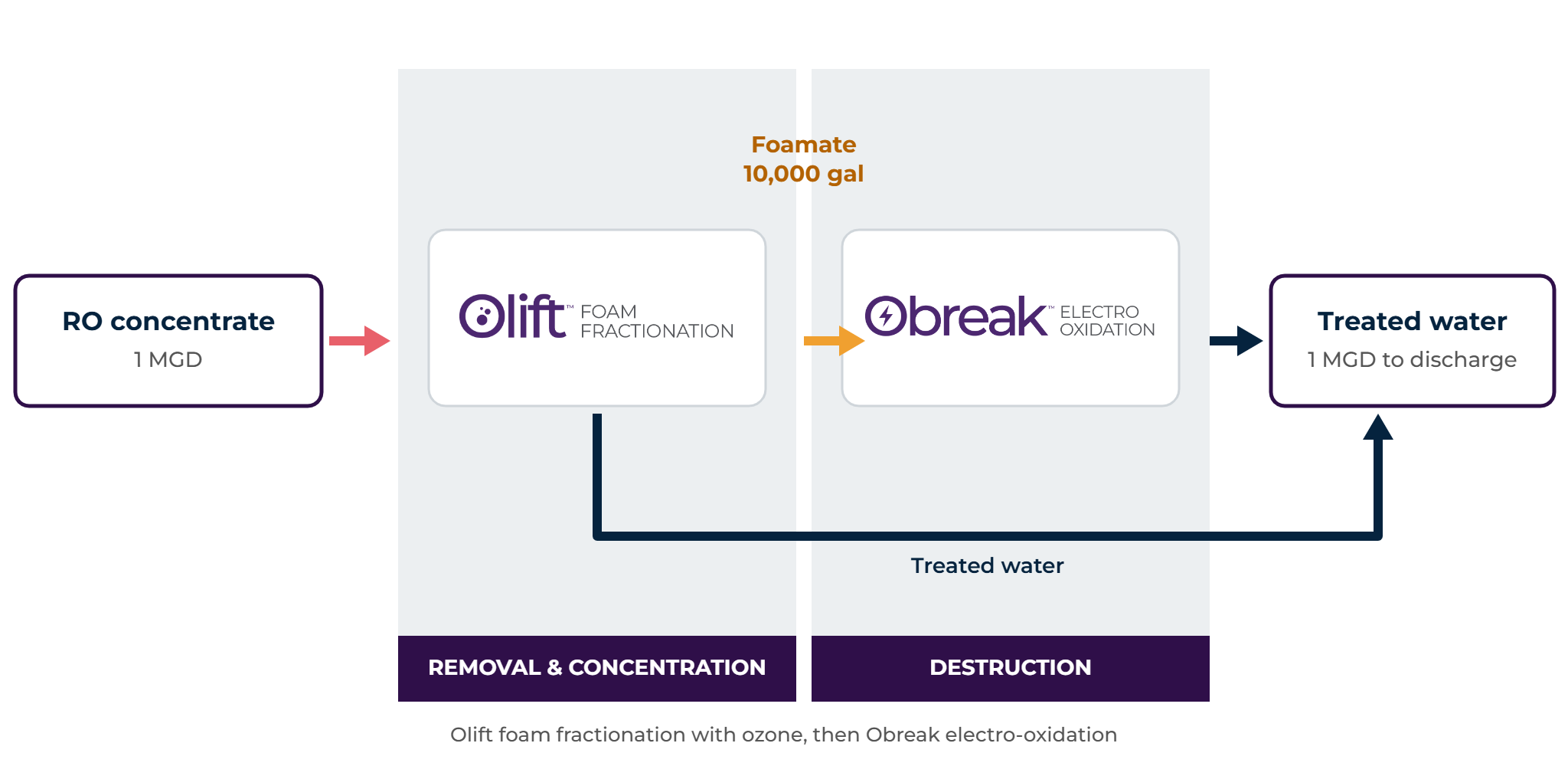
Concentrate onsite, destroy onsite, discharge clean
WHY THIS APPROACH
Built for ratepayer-funded budgets
Predictable OPEX
Converts an open-ended media-replacement cost into a known, budgetable operating expense.
Meets the MCL without guesswork
Destroys PFAS rather than relocating it, so the compliance picture doesn’t depend on where captured media eventually goes.
Protects public trust
Onsite destruction gives utilities a straight answer when the public asks what happens to the PFAS once it’s “removed.”
Scales to your system
From a single well to a full municipal plant, the same closed-loop approach scales up or down.
REGULATORY CONTEXT
As of mid-2026, EPA’s PFOA/PFOS MCL remains in effect while a proposed compliance-deadline extension and a separate rescission rule for four other PFAS are still under review.
REAL RESULTS
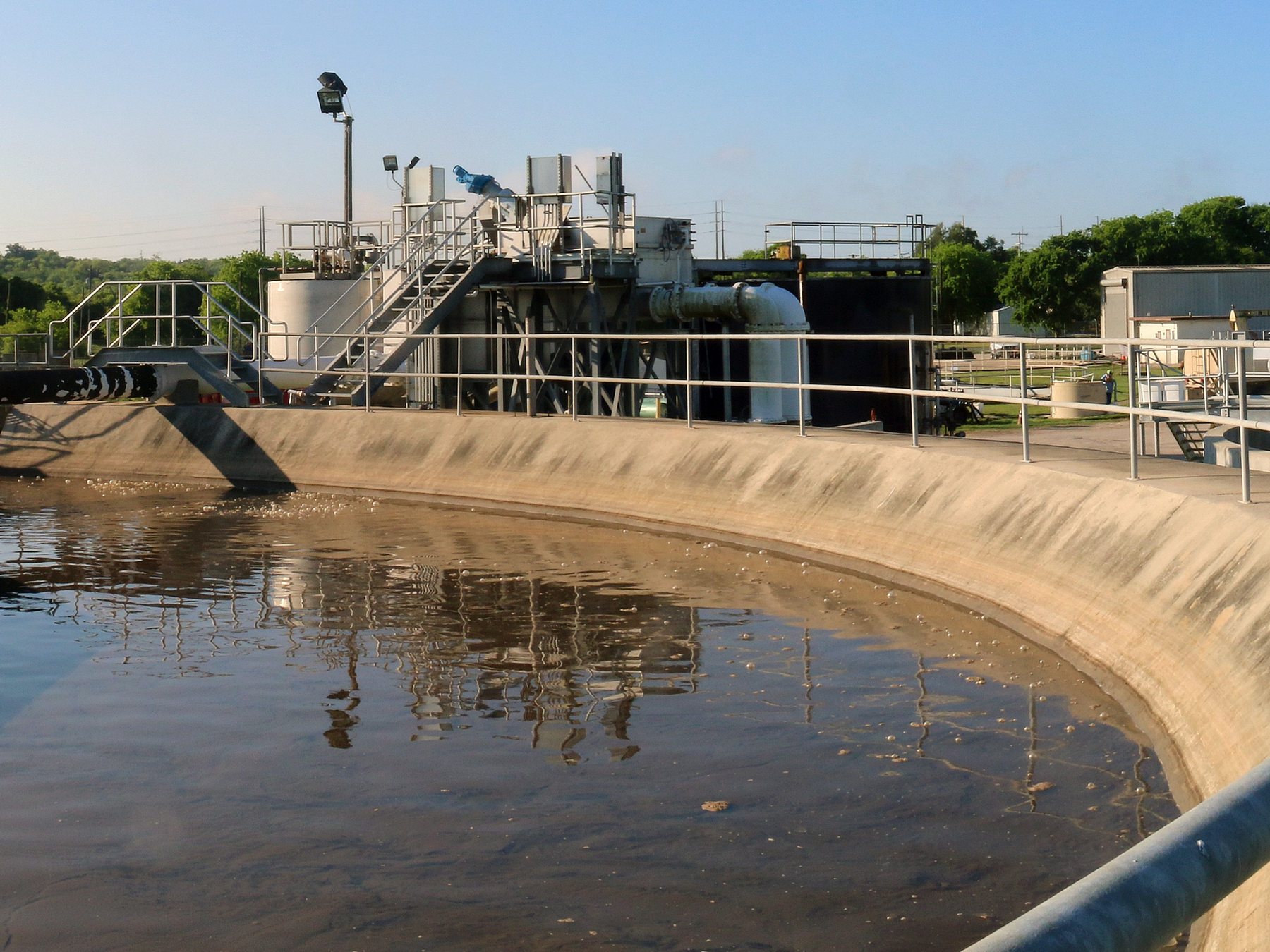
Onsite PFAS removal at a 10 MGD drinking water plant
West Morgan-East Lawrence Water and Sewer Authority in Hillsboro, Alabama piloted E2METRIX®’s Olift® foam fractionation with ozone on reverse osmosis concentrate from its surface water plant, removing over 90% of each regulated PFAS compound and cutting foamate volume more than 4x versus air alone.
>90%
EACH REGULATED PFAS REMOVED
4x+
LESS FOAMATE WITH OZONE
10 MGD
PLANT CAPACITY (HILLSBORO, AL)
FAQ
Municipal PFAS treatment questions
What is the federal limit for PFAS in drinking water?
EPA’s 2024 rule set a 4 ppt Maximum Contaminant Level (MCL) for PFOA and PFOS in drinking water, the first legally enforceable federal PFAS limit.
Is the compliance deadline changing?
EPA has proposed extending the PFOA and PFOS compliance deadline from 2029 to 2031, and has separately proposed rescinding limits on four other PFAS. Utilities are planning under real uncertainty.
Why not rely on GAC or ion exchange alone?
GAC and ion exchange media capture PFAS but do not destroy it. Someone still has to dispose of the spent, PFAS-laden media, so the compliance picture depends on where it ends up.
Has this been tested at a drinking water plant?
West Morgan-East Lawrence Water and Sewer Authority in Hillsboro, Alabama piloted Olift® foam fractionation with ozone on reverse osmosis concentrate from its 10 MGD surface water plant. It removed over 90% of each regulated PFAS compound and cut foamate volume more than 4x versus air alone. See the case studies.