

Compare / PFAS cost
PFAS treatment cost per gallon
What drives it, and what to ask before you compare
Short answer
PFAS treatment cost per gallon depends on flow, PFAS concentration, your discharge or treatment target, water chemistry and, above all, what happens to the PFAS afterward. Capture-only treatments leave a waste stream to pay for. Concentrating with Olift® foam fractionation and destroying with Obreak® electro-oxidation keeps the destruction step small. In the Passaic Valley pilot Obreak® electro-oxidation used under 0.016 kWh per gallon.
Cost drivers
What sets the cost per gallon
Flow and volume
How many gallons a day you treat, and whether the stream is steady or variable.
PFAS concentration
Strong streams such as RO concentrate and leachate cost differently to treat than dilute water.
Treatment target
The limit you must meet decides how far the treatment train has to go.
Water chemistry
Other contaminants and organics in the water change how each process performs.
Disposal of the PFAS
Capture-only treatment leaves spent media or concentrate to haul and manage. Destruction does not.
Energy and operations
Power, labor and monitoring. Olift® foam fractionation and Obreak® electro-oxidation run continuously and can be operated remotely.
Where cost is saved
Small stream, small destruction step
Olift® foam fractionation raises PFAS concentration in the feed by 100x to 10,000x. The foamate is generally 1% to 10% of the water treated, so the destruction step needs far less capital and energy.
Obreak® electro-oxidation destroys PFAS at the site, which eliminates transportation and liability concerns and can significantly reduce long-term disposal costs compared with adsorption-only methods.
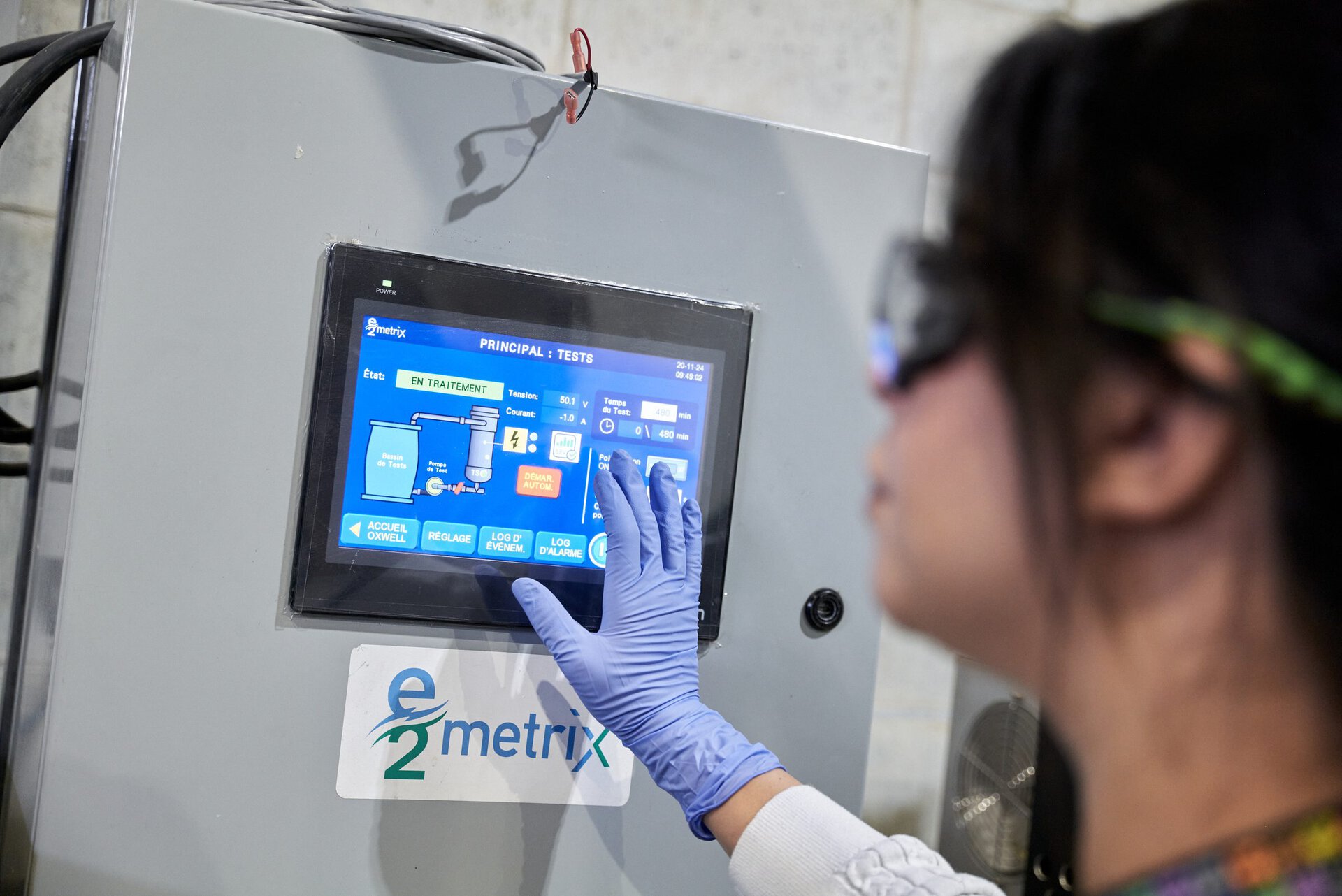
<0.016
kWh per gallon used by Obreak® electro-oxidation to destroy PFAS in the Passaic Valley Sewerage Commission pilot
94 to 96%
of the concentrated PFAS destroyed in that pilot
500,000 gpd
proposed capacity at that site
Get a number
How to get a cost for your site
1. Share your water
Site type, flow, PFAS concentrations, target limits and timeline.
2. Pilot it
A pilot on your water shows removal, destruction and energy use for your conditions.
3. Scale the result
Pilot data becomes a site-specific estimate for the full treatment train.
FAQ
Cost questions
Why is there no single price per gallon for PFAS treatment?
Cost depends on flow, PFAS concentration, treatment target, water chemistry and what happens to the PFAS afterward. A number without those inputs would mislead. A pilot produces a figure for your site.
What is the biggest cost driver?
What happens to the captured PFAS. Capture-only treatments create a waste stream that has to be transported and disposed of. Destroying PFAS onsite avoids that step.
Does concentrating PFAS first reduce cost?
Yes. Olift® foam fractionation concentrates PFAS by 100x to 10,000x, so the Obreak® electro-oxidation destruction step sees a small, strong stream and needs far less capital and energy.
How much energy does Obreak® electro-oxidation use?
In the Passaic Valley Sewerage Commission pilot, Obreak® electro-oxidation destroyed 94 to 96% of the concentrated PFAS using under 0.016 kWh per gallon.
How do I get a cost for my site?
Contact E2METRIX® to talk with an engineer about your water, your limits and a pilot plan. See pilots.
Keep reading
Related pages
Tell us about your site
Send us your flow and PFAS concentrations. An E2METRIX engineer will reply within 24 hours.