
Compare / PFAS disposal
Onsite vs. offsite PFAS disposal
What happens to PFAS concentrate after treatment
Short answer
Most PFAS treatment leaves a concentrate or spent media that has to go somewhere. Offsite disposal means hauling it away and relying on others to handle it. Onsite destruction with Obreak® electro-oxidation breaks the PFAS down where it is generated, which eliminates transportation and liability concerns. Olift® foam fractionation keeps the volume small first, generally 1% to 10% of the water treated.
The problem
Treatment creates a waste stream
Reverse osmosis, granular activated carbon and ion exchange capture PFAS from water. They do not destroy it. The PFAS ends up in a concentrate or in spent media that must be dealt with separately.
Sending that material offsite is expensive and carries its own risks. Onsite destruction offers greater confidence by minimizing exposure and risk.
Side by side
Offsite disposal compared with onsite destruction
| Offsite disposal | Onsite destruction | |
|---|---|---|
| What leaves the site | Concentrate or spent media, by truck | Nothing hazardous to haul; the PFAS is destroyed at the site |
| Transportation | Required, with handling at each step | Eliminated |
| Volume to manage | Everything captured | A small foamate volume, generally 1% to 10% of the influent, concentrated 100x to 10,000x |
| Responsibility | Material leaves your site; confirm with your regulator and counsel how responsibility is treated | Destruction happens under your control at the site |
| End state | Depends on the receiving facility | Carbon dioxide and fluoride ions |
Regulations vary by state and country. Check requirements for your material with your regulator.
How it works
Concentrate first, then destroy
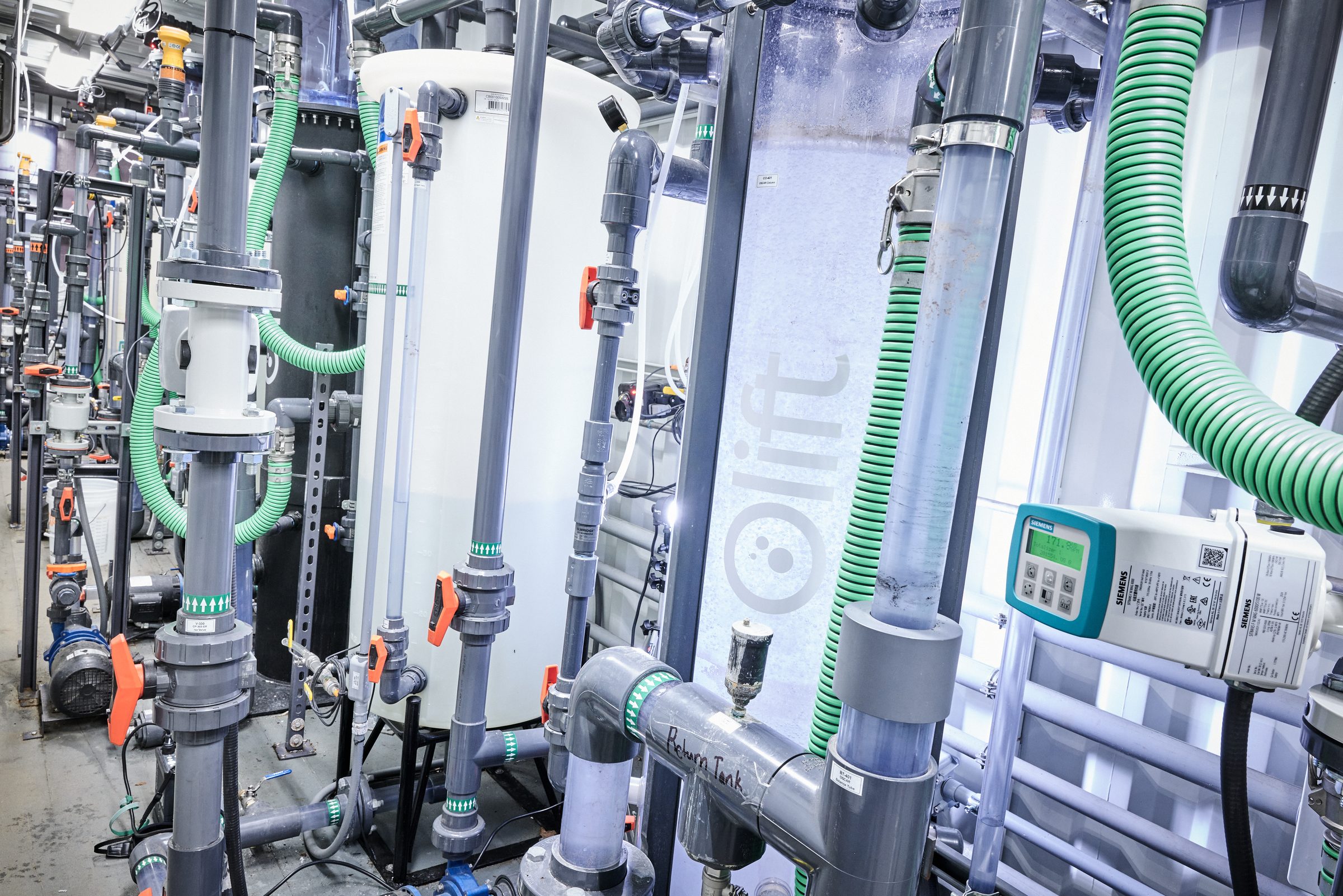
- Olift® foam fractionation removes and concentrates PFAS, with up to 99% targeted PFAS removal.
- Obreak® electro-oxidation destroys the concentrated PFAS with direct and indirect oxidation. A sensible target is 90% to 99%.
- A media polishing step finishes the job.
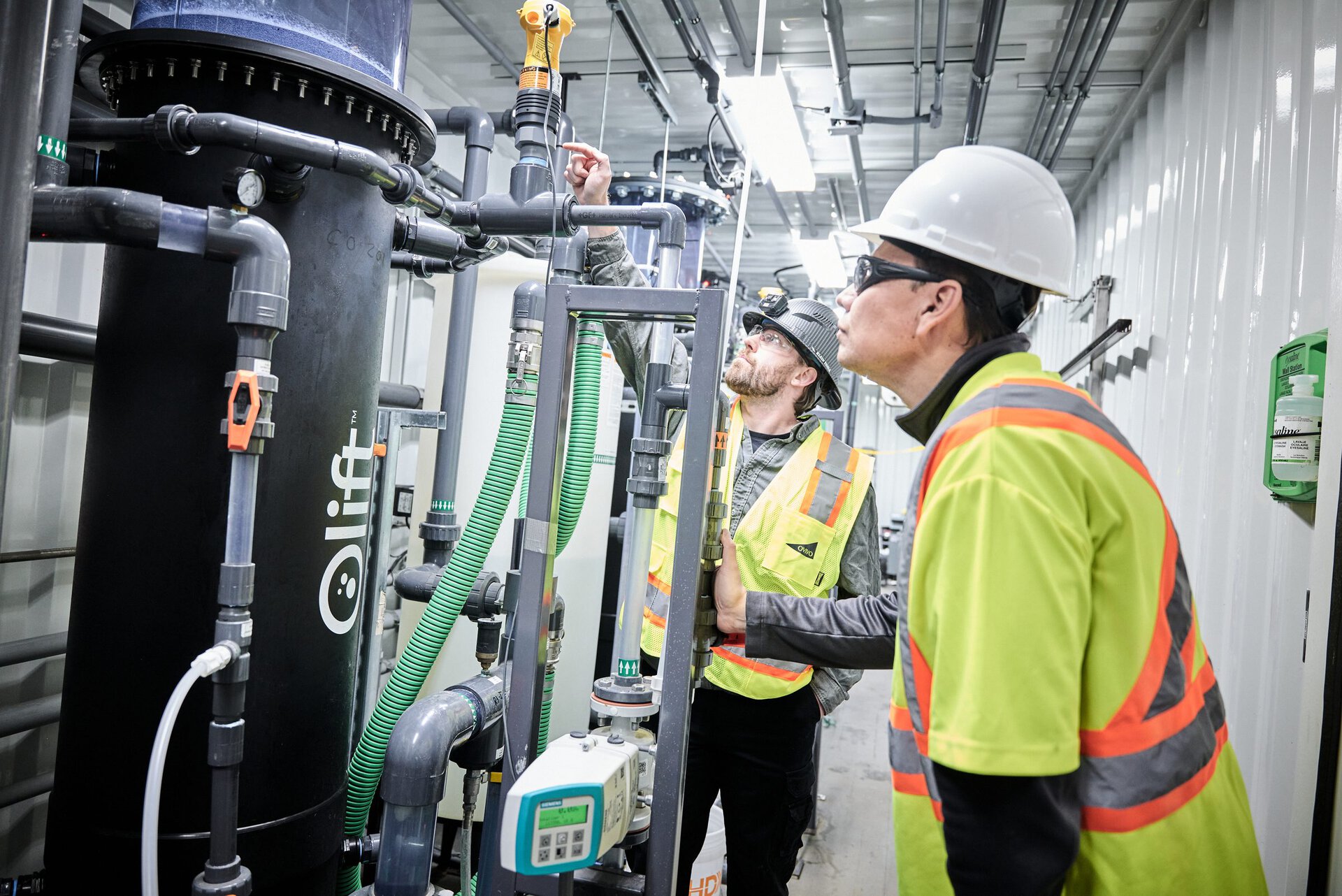
Obreak® electro-oxidation can be delivered in a container or trailer, or installed as a fixed system inside a building.
93%
of total PFAS removed from landfill leachate in the Passaic Valley Sewerage Commission pilot
94 to 96%
of the concentrated PFAS destroyed by Obreak® electro-oxidation
500,000 gpd
proposed capacity for the integrated system at that site
FAQ
Onsite and offsite disposal questions
What happens to PFAS concentrate that leaves the site?
It is transported to another facility for handling or disposal. That adds transportation, handling and tracking, and the PFAS has to be managed again at the other end.
Does onsite destruction remove the need to haul PFAS away?
Obreak® electro-oxidation destroys the PFAS at the site where the contaminated liquid is located, which eliminates transportation and liability concerns for the destroyed material.
Why does Olift® foam fractionation come first?
Olift® foam fractionation concentrates PFAS by 100x to 10,000x into a small foamate volume, so the Obreak® electro-oxidation step needs far less capital and energy.
What can Obreak® electro-oxidation be installed in?
A container, a trailer or a fixed installation inside a building.
Where has this been shown?
At the Passaic Valley Sewerage Commission in Newark, New Jersey, 93% of total PFAS was removed from landfill leachate and Obreak® electro-oxidation destroyed 94 to 96% of what was concentrated. See the case studies.
Keep reading
Related pages
Tell us about your site
Send us your flow and PFAS concentrations. An E2METRIX® engineer will reply within 24 hours.